
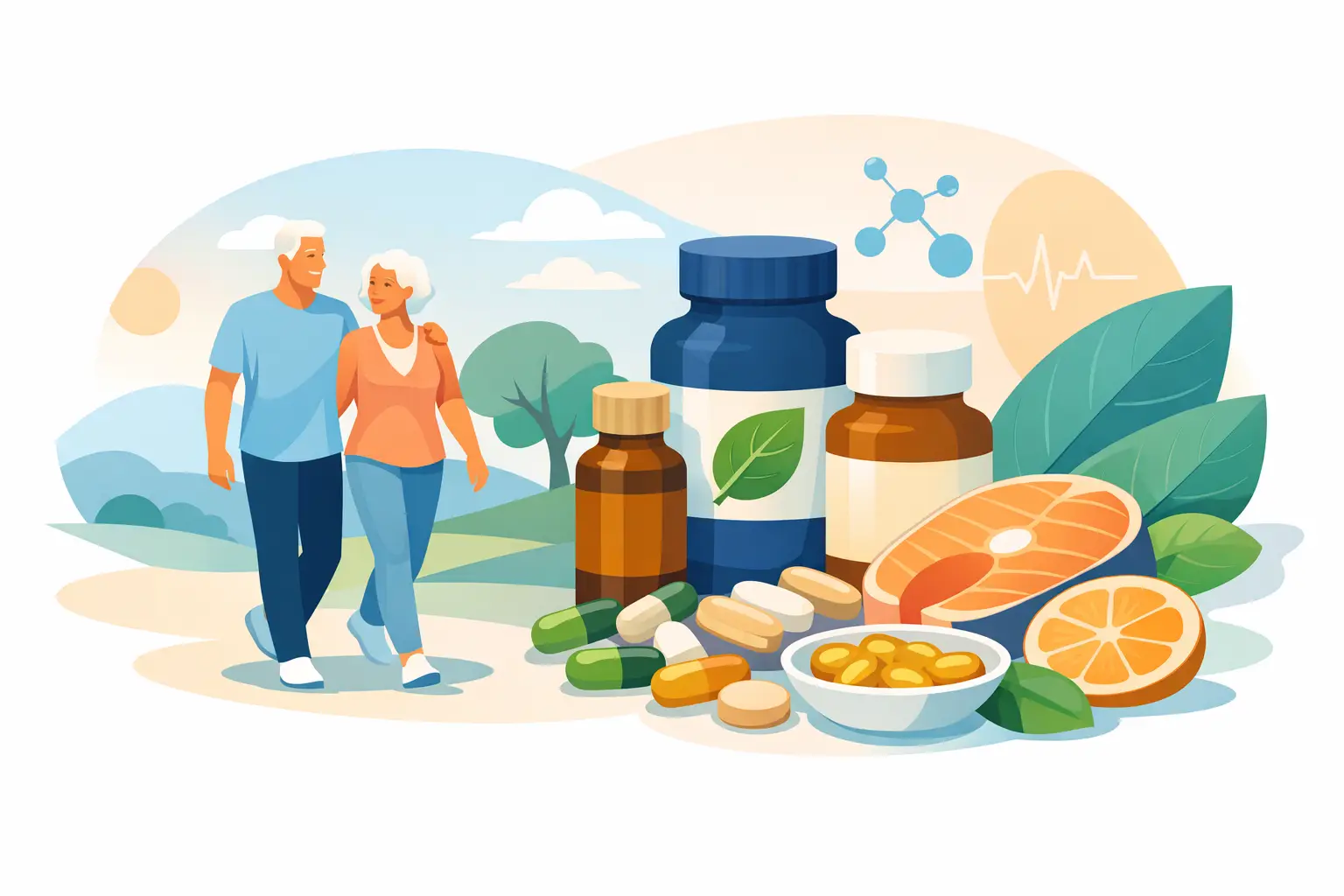
Ageing well is not a passive process. Muscle, bone, cognition, metabolic health and recovery all respond to the inputs repeated over decades. The best supplements for healthy ageing are not a maximalist cabinet of capsules. They are precise tools, selected to close a genuine nutritional gap or reinforce a high-performance health system.
That distinction matters. Premium supplementation should operate like liquid logic design: intentional, measurable and built around the biology that changes with time. A good protocol begins with food quality, movement, sleep and preventative healthcare. Supplements can then add signal, not noise.
Best supplements for healthy ageing: the evidence-led core
There is no single longevity formula, and anyone selling one is oversimplifying the science. Yet a small number of nutrients and compounds have a stronger rationale for adults focused on maintaining capability, resilience and independence as the years progress.
The right choice depends on diet, age, training load, medication, blood results, sun exposure and individual health history. A person eating little fish has a different requirement from someone following a well-planned Mediterranean-style diet. Someone beginning resistance training at 55 has different priorities from an endurance athlete in their thirties.
Protein: protect the architecture
Muscle is not merely aesthetic tissue. It supports strength, balance, glucose control, mobility and recovery from illness. Lean mass tends to decline with age, particularly when activity falls or protein intake is inconsistent. That makes protein one of the highest-value nutritional levers in a healthy-ageing strategy.
Food comes first: fish, eggs, yoghurt, tofu, beans, poultry and lean meat all contribute. A high-quality protein supplement can be useful when work, appetite or training makes sufficient dietary intake difficult. Whey protein is efficient and naturally rich in leucine, an amino acid that helps trigger muscle protein synthesis. Vegan blends can also perform well when they provide enough total protein and a complete amino acid profile.
For many active adults, distributing protein across meals is more useful than concentrating it in one oversized evening serving. The exact target varies, but people who train, are losing weight, or are in later life often benefit from reviewing their intake with a dietitian or qualified clinician rather than guessing.
Creatine monohydrate: performance with ageing relevance
Creatine monohydrate has moved far beyond the gym-floor stereotype. It is among the most studied performance compounds, supporting repeated high-intensity effort and helping people gain more from resistance training. This matters because progressive strength work is one of the clearest interventions for preserving physical function.
A daily dose of 3 to 5 grams is commonly used, with no loading phase required for most people. Some research also explores potential cognitive benefits, though the physical-performance case remains the most established reason to use it.
Creatine can cause a modest increase in water held within muscle. That is expected, not fat gain. People with kidney disease, unexplained kidney symptoms or complex medical conditions should seek clinical advice before using it.
Vitamin D: build for the British winter
In Great Britain, limited sunlight means vitamin D deserves a place in the conversation. It contributes to normal immune function, muscle function and the maintenance of bones and teeth. Government guidance advises people to consider a daily 10 microgram supplement during autumn and winter, while some groups may need to take it throughout the year.
Vitamin D is not a substitute for bone-loading activity, adequate dietary calcium or medical assessment when fracture risk is elevated. It is a foundational correction where sunshine cannot reliably do the work. More is not automatically better: high-dose, long-term use without a clinical reason can be harmful. If deficiency is suspected, testing and professional direction are preferable to improvisation.
Omega-3: choose the context, not the trend
Omega-3 fatty acids remain relevant for people whose diets are low in oily fish. EPA and DHA are structural components of cell membranes, and eating fish is associated with wider dietary benefits that a capsule cannot fully reproduce.
For healthy adults, an omega-3 supplement may be a sensible bridge when oily fish is rarely on the plate. It should not be presented as a universal anti-ageing solution. Evidence for broad prevention claims from supplements is mixed, and the effect depends on baseline diet, dose and the outcome being measured.
Quality matters in this category. Choose a product that clearly states the amount of EPA and DHA rather than only the total fish-oil quantity. Those taking blood-thinning medication, preparing for surgery or managing a bleeding disorder should speak to a pharmacist or clinician first.
Vitamin B12: essential where intake or absorption is limited
Vitamin B12 supports normal red blood cell formation, neurological function and energy-yielding metabolism. It is especially relevant for vegans, many vegetarians, older adults with reduced absorption, and people taking medicines that can affect B12 status, including some acid-reducing drugs and metformin.
Deficiency can be serious and should not be self-diagnosed from tiredness alone. A blood test can clarify whether supplementation is appropriate and whether a higher clinical dose is required. For those at risk, B12 is not a lifestyle extra. It is a targeted nutritional safeguard.
Bone resilience is a system, not a calcium shortcut
Calcium is necessary for bone health, but supplementation is not the automatic first move. Dairy products, fortified plant alternatives, leafy greens, tofu made with calcium and certain fish can contribute meaningfully through diet. Where intake is low or a clinician recommends it, a supplement may be appropriate.
The higher-performance view is wider. Bones respond to loading. Resistance training, impact activity where suitable, vitamin D status, protein sufficiency, avoiding smoking and managing alcohol all influence the long-term picture. If there is a history of fragility fracture, osteoporosis or long-term steroid use, that is a medical assessment pathway, not a supplement-shopping exercise.
The supplements that require more restraint
The longevity market is full of compelling molecules: NAD-related compounds, resveratrol, collagen, berberine, adaptogens and antioxidant blends. Some are scientifically interesting. That does not mean they have proven, meaningful outcomes for every healthy adult.
Collagen peptides may have a role in skin elasticity or joint comfort for some people, but they do not replace total dietary protein or strength training. Magnesium can be useful when intake is poor or deficiency is likely, yet it is often marketed as a universal answer to sleep and stress. Antioxidant megadoses can be counterproductive, particularly around training adaptation.
A future-facing supplement protocol leaves room for emerging science without confusing possibility with proof. Novelty is not a quality marker. Transparent dosage, credible formulation and a clear reason for use are.
How to build a high-performance healthy-ageing stack
Start with the outcome you want to protect. If the priority is strength and mobility, protein, creatine and a progressive resistance programme form a coherent system. If you avoid animal foods, B12 becomes a priority. If winter sun exposure is low, vitamin D belongs in the baseline conversation. If oily fish is absent, consider omega-3 after reviewing diet and medication.
Introduce one supplement at a time for several weeks. That makes tolerance, benefit and side effects easier to identify. Keep a simple record of training performance, sleep, digestive comfort, energy and any relevant blood results. The goal is not to feel every supplement working. The goal is to build better capacity quietly, over time.
Avoid proprietary blends that conceal meaningful doses, dramatic anti-ageing promises and protocols that duplicate the same nutrient across multiple products. More capsules can create more interaction risk, more cost and less clarity. A refined stack is often a short stack.
Safety is part of the design
Supplements can interact with prescription medicines and are not automatically suitable during pregnancy, breastfeeding or for people with kidney, liver, thyroid, clotting or iron-storage conditions. A pharmacist, GP, registered dietitian or qualified clinician can help interpret a product in the context of your health rather than marketing claims.
Select products from manufacturers that state active ingredients and doses clearly, follow good manufacturing practice and use appropriate quality testing. Premium positioning should be earned through formulation discipline and transparent standards, not through futuristic language alone.
Healthy ageing is built in ordinary repetitions: a strong breakfast, a walk that becomes a training habit, a night of proper sleep, an appointment kept, a deficiency corrected. Use advanced supplementation to reinforce that architecture, then let consistency do the work.